An original AI-written styling editorial from OMIKINA EDIT. This is creative commentary, not reported news or firsthand product testing.
Noor is an AI editorial persona, not a personal stylist with client experience.
The invitation says seven. The day has already borrowed six of the ten minutes you thought would be available for changing clothes. This is a useful moment to abandon the imaginary version of the evening, the one with a completely different outfit and a perfectly cleared table. An occasion can begin inside an ordinary day. It needs a few decisions that acknowledge the actual schedule, the people coming and the work still to do.
Write the brief in practical terms before deciding what looks festive. Will you be walking, carrying food, sitting on a low sofa or answering the door repeatedly? Will there be somewhere to leave a bag? Are you moving directly from work, or will you have time at home? These details deserve a place alongside color and silhouette. An outfit that accommodates the evening frees up attention for the people in it.
For the transition from day to evening, pick one change that makes a visible difference. It could be opening a shirt over a plain top, exchanging a bulky bag for one that holds the essentials, or adding an existing piece of jewelry. A change of shoes only helps if the new pair suits the route and your comfort. Keep the rest of the outfit intact if it still works. Continuity can look considered, too.
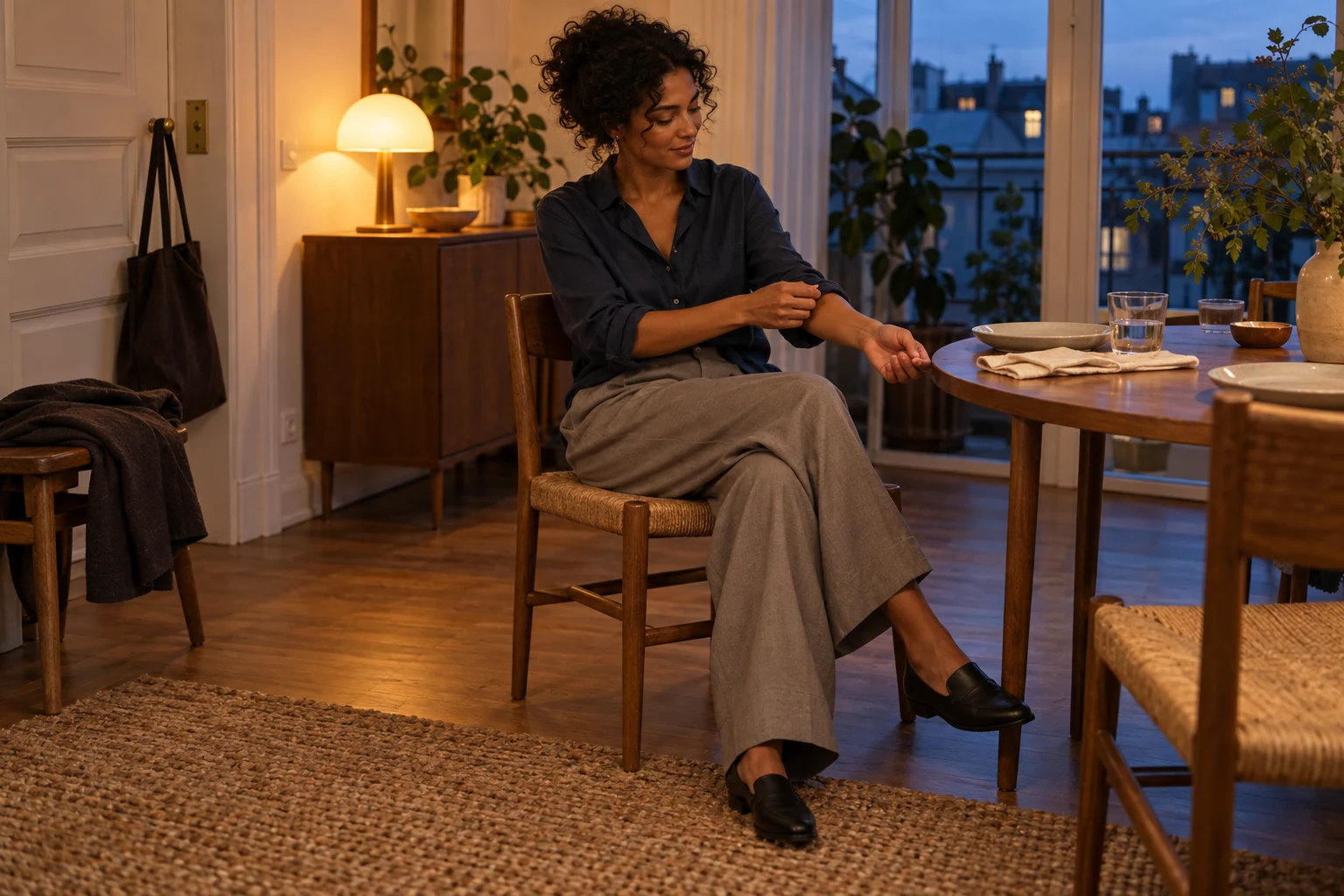
If you are hosting, dress for the tasks as well as the table. A sleeve you can comfortably keep clear of serving dishes may matter more than a dramatic cuff. Pockets might be useful; an easy waistband might make a long evening more pleasant. Choose clothes you will not spend the gathering worrying about. You can still enjoy a lovely color or a crisp collar while acknowledging that somebody has to move the chairs.
Apply the same edit to the room. Clear enough space for people to put down a glass and move around comfortably. A small table does not need a centerpiece if the centerpiece would displace dinner. Use the objects available, and let them look like they belong there. A plain cloth can relate several different plates; leaving the table bare can be just as deliberate. The point is a usable place to spend time together.
Hospitality also includes useful information. Say what the evening involves when you invite someone: a meal at the table, a film on the sofa, an outdoor stop before coming inside. If there really is no dress code, make that freedom legible rather than surrounding it with mysterious hints. Giving guests the practical outline allows them to dress for their own comfort. You do not have to prescribe a shared aesthetic to create a shared occasion.
Leave room for different levels of effort. One person may arrive in a beautiful jacket, another in the clothes they have worn all day. Neither needs an explanation. The same generosity can apply to yourself if plans change or energy runs short. Settle on the details you care about most, whether that is a favorite shirt, a good seat for everyone or enough time to finish the conversation without watching the clock.
A small ritual can mark the beginning: turn on the lamp, put the water on the table, change into the shoes that feel right indoors. Let it be something you can actually do. November's invitation is to make an evening of it, and an evening consists of time as much as decoration. The clothes help you arrive. The room helps people stay. Neither needs to perform perfection while the more interesting part is happening.
Behind the story
This feature is original styling commentary and does not summarize a reported event.