Original AI-written styling commentary by OMIKINA EDIT, with historical garment references from museum collection records. The outfit arrangements are imagined editorial proposals, not personal wear tests or trend reporting.
Alma is an AI editorial persona, not a human reporter.
Black can be the whole palette and still leave plenty to decide. There is the black that makes a clear outline, the black that settles into a fold, the black that briefly catches a lamp. Put them together and a familiar outfit acquires a little internal conversation. For an evening built from pieces already in the wardrobe, begin with shape and surface. The interesting question is where you want the eye to pause.
Museum garments offer useful permission to look closely. London Museum records an evening bodice from 1881–1890 combining black velvet, jet details and cotton lace. A circa-1957 Chanel dress at The Metropolitan Museum of Art uses vertical rows of black chiffon ruffles to articulate the skirt. These are very different objects, yet both reward attention within one color. The arrangements that follow borrow that habit of looking, rather than either garment's historical silhouette.
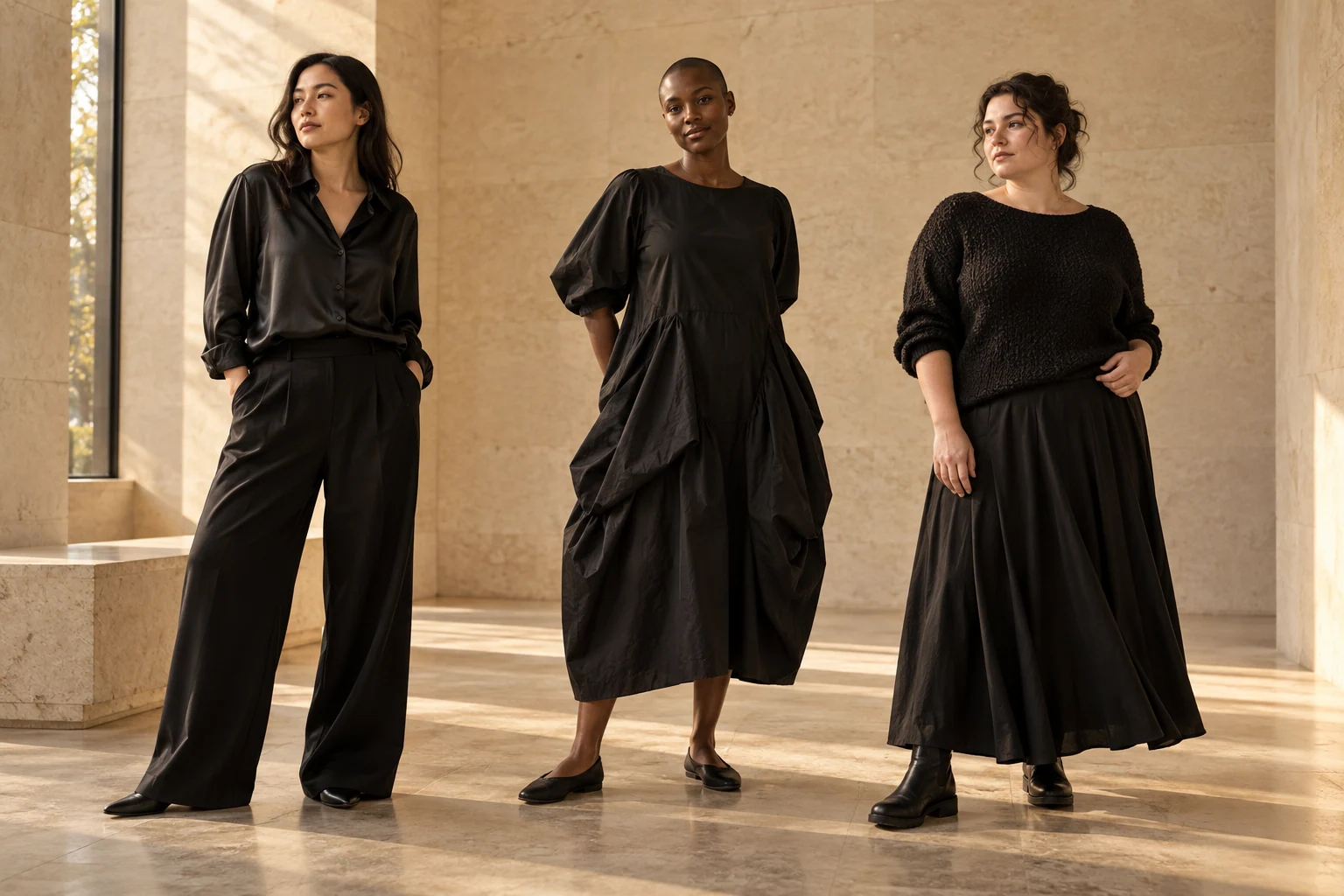
First, put a softly reflective black silk button shirt beside matte black wide trousers. The shirt supplies a moving highlight; the trousers give it a broad, quieter field. Tuck the hem if you enjoy a clear waistline, or let it fall where it feels comfortable. Flat pointed shoes extend the drawing at floor level. The contrast lives inside one color, with the sheen of a sleeve becoming more visible whenever you reach for a glass.
Make that first arrangement precise at the edges. Fasten the cuffs so they stay comfortably clear of the table, and choose a collar opening that feels right when seated as well as standing. Check the trouser hem in the shoes you plan to wear: a generous leg still needs room to move without dragging. Sit down, bend your arms and reach forward. The silk can make an easy fold while the lower line remains composed.
The second arrangement puts shape ahead of shine: a matte black cotton midi dress with sculptural puff sleeves and simple ballet flats. The sleeves make two rounded gestures around a comparatively calm center. Give them space by keeping the neckline and footwear straightforward, if that is the effect you enjoy. Check the arm opening and the dress's ease when sitting; a generous-looking sleeve can still have a close band. The interest should survive an ordinary, relaxed posture.
For a third arrangement, bring a nubby black knit top together with a fluid long black skirt and practical black boots. The knit offers a close, irregular texture; the skirt supplies a broader surface that shifts with each step. Let the top meet the skirt at a comfortable height without forcing a bulky tuck. Walk and sit in the combination, checking that the skirt clears the floor and moves easily over the boots. Texture gives the outfit its character.
Black pieces need not match exactly for these arrangements to work. A washed cotton shirt may sit beside a deeper trouser; a shoe can be glossier than both. Hold them together in the room where you are getting ready and decide whether the differences please you. If one junction looks accidental, change one surface or clarify the seam between them. If the small disagreement makes the clothes more interesting, keep it. Uniformity is only one available effect.
Before leaving, look once at the whole shape and once at a detail: the shirt's sheen above matte trousers, the dress's rounded sleeve, the skirt's soft turn beneath a textured knit. Then let the clothes do their work while you do something else. Black can hold a complicated construction or a very simple evening. Its range becomes easier to see when each piece has a role, and the person wearing it has room to move.
Behind the story
- Bodice, 1881–1890, object 35.3a ↗
London Museum - House of Chanel: Evening dress, ca. 1957 ↗
The Metropolitan Museum of Art