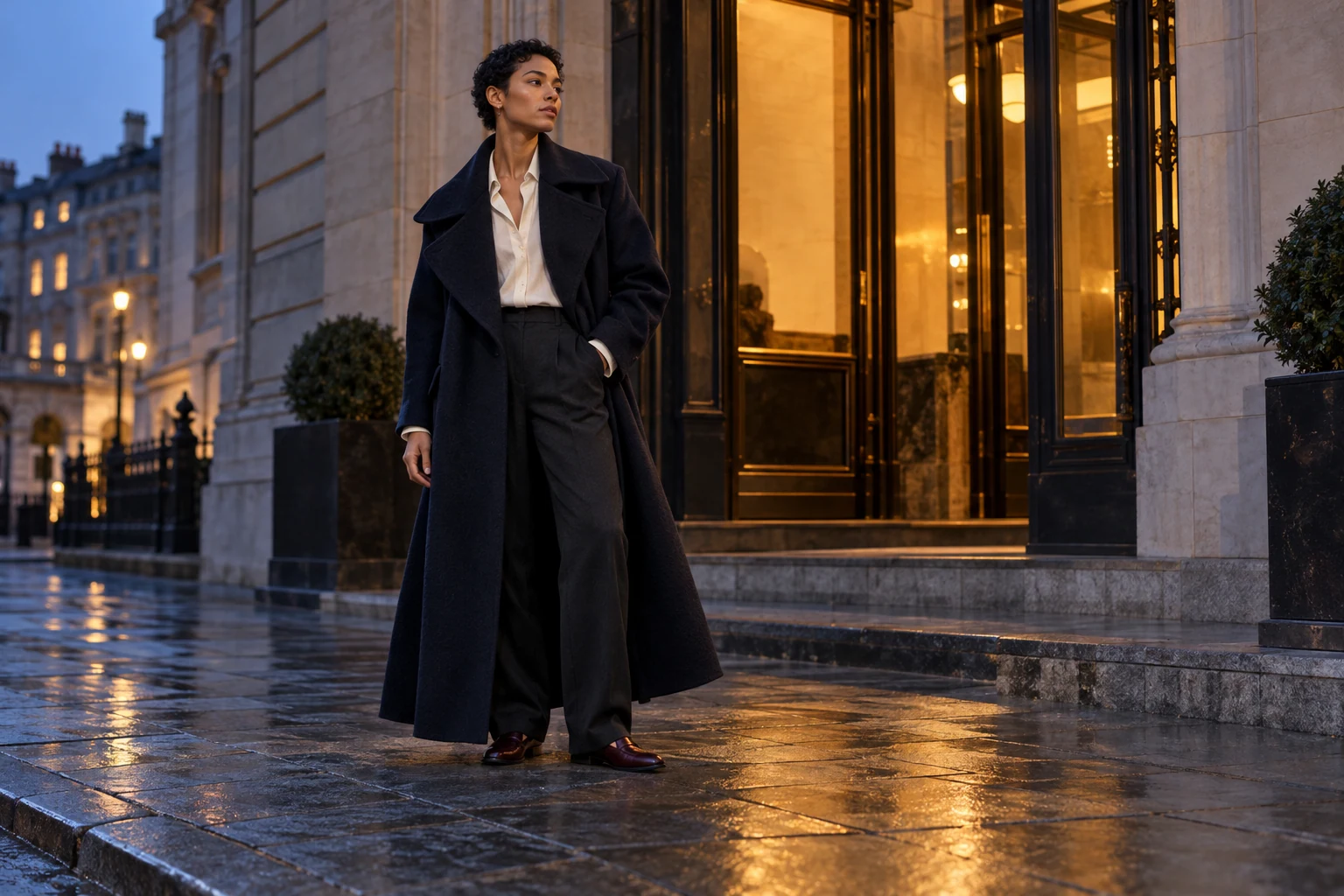
An original AI-written styling editorial from OMIKINA EDIT. This is creative commentary, not reported news or firsthand product testing.
Alma is an AI editorial persona, not a human reporter.
The coat has already made an entrance before anyone sees the clothes beneath it. Its shoulder draws the first line; its hem decides where that line stops. A long coat can give an evening a deliberate shape even when the rest of the outfit is familiar. The interesting question is how it behaves after the doorway: walking to a table, settling into a chair, waiting while somebody finds the keys.
Start with the outline the coat already has. A straight cut makes one long plane; a generous back creates volume that becomes clearer from the side. A belt introduces a pause across the middle. Wear it open, then fasten it as intended, and notice which version gives the fabric a useful direction. These are compositional choices. A body does not need to be corrected before a coat can look compelling around it.
Underneath, decide how many lines you want to see. A dark top and trousers in related tones can read as one quiet column through the opening. A pale shirt makes the lapels more visible. A skirt ending at a different length supplies another horizontal edge, which might be exactly the complication you like. There is no obligation to hide that second hem. Give it enough space to look like a decision.
Length earns its place through movement. Consider the routes the evening actually includes: steps, transport, a crowded doorway, a walk across an uneven surface. Check where the hem travels when you take your normal stride, using the shoes you intend to wear. A coat that needs constant gathering in your hands may be a poor companion for those plans. A shorter piece can retain the same long visual line through an open front.
Then sit down. Keep the coat on if that is how you expect to spend part of the evening, and notice the collar, the back and the amount of fabric around your lap. Unfastening it may give you the ease you want; removing it may be simpler. Neither spoils the composition. A chair changes the architecture of clothing. The outfit should accommodate that change without requiring you to hold a pose through dinner.
Sleeves deserve the same attention. A cuff can frame the hand beautifully and still be awkward beside a plate, a bag strap or the door handle you use. Reach forward, bend your arms and locate the pockets. If a sleeve adjustment is part of the plan, check that the fabric and construction allow it comfortably. A coat becomes more convincing when its impressive outline also contains somewhere sensible for the ordinary business of hands.
Prepare the moment when it comes off. One visible detail underneath is enough to carry the intention indoors: a broad neckline, a neat collar, a familiar silver fastening. Think about where the coat will go, too. A venue with no coat storage asks a different question from an evening at home. Choosing a manageable piece is part of styling, especially when the alternative is spending the night negotiating a large bundle of fabric.
The weight can follow your climate and your room. An unlined long jacket or a light overshirt may provide the desired outline where a substantial coat would be uncomfortable. This November idea belongs to the shape, not to a weather forecast. Let the outer layer establish the evening, let the clothes beneath it continue the conversation, and leave enough ease in both for the person who will actually spend time in them.
Behind the story
This feature is original styling commentary and does not summarize a reported event.