An original AI-written styling editorial from OMIKINA EDIT. This is creative commentary, not reported news or firsthand product testing.
Remy is an AI editorial persona; sustainability and performance claims require supporting sources.
The chair has accepted a blouse, a jacket and one ambiguous pile of trousers. It is doing a convincing impression of a wardrobe, but it cannot make the next decision for you. The morning after an occasion is a useful time to notice which clothes deserve an ordinary second life. Before they disappear into a special section reserved for events, give them a route back into the week you are actually going to have.
Begin with the care label. Different fabrics, linings and decorations can make similar-looking garments require different treatment, so follow the directions on the actual piece. If they are missing or unclear, seek guidance from its maker or an appropriate professional before improvising. There is no universal freshening trick for evening clothes. The practical first step is knowing what you have, then separating pieces that need attention from pieces ready to return to storage.
Check the garment while the evening is still reasonably easy to recall. Look at the cuffs, hem, closures and pockets, and note anything that needs repair or care according to those instructions. Empty the pockets before putting the piece away. Keep a loose fastening with its garment so the two can be reunited. A short note about the problem can be more useful than leaving the whole outfit on a chair as a reminder.
Storage is another decision that belongs to the individual piece. Check any storage advice supplied by the maker before choosing folding or hanging, and give the piece enough space rather than forcing it into a crowded gap. Accessories can return to their own places, with delicate items separated as appropriate. This need not become a wardrobe overhaul. The aim is simply to make the clothes available, rather than leave them tangled in the evidence of last night.
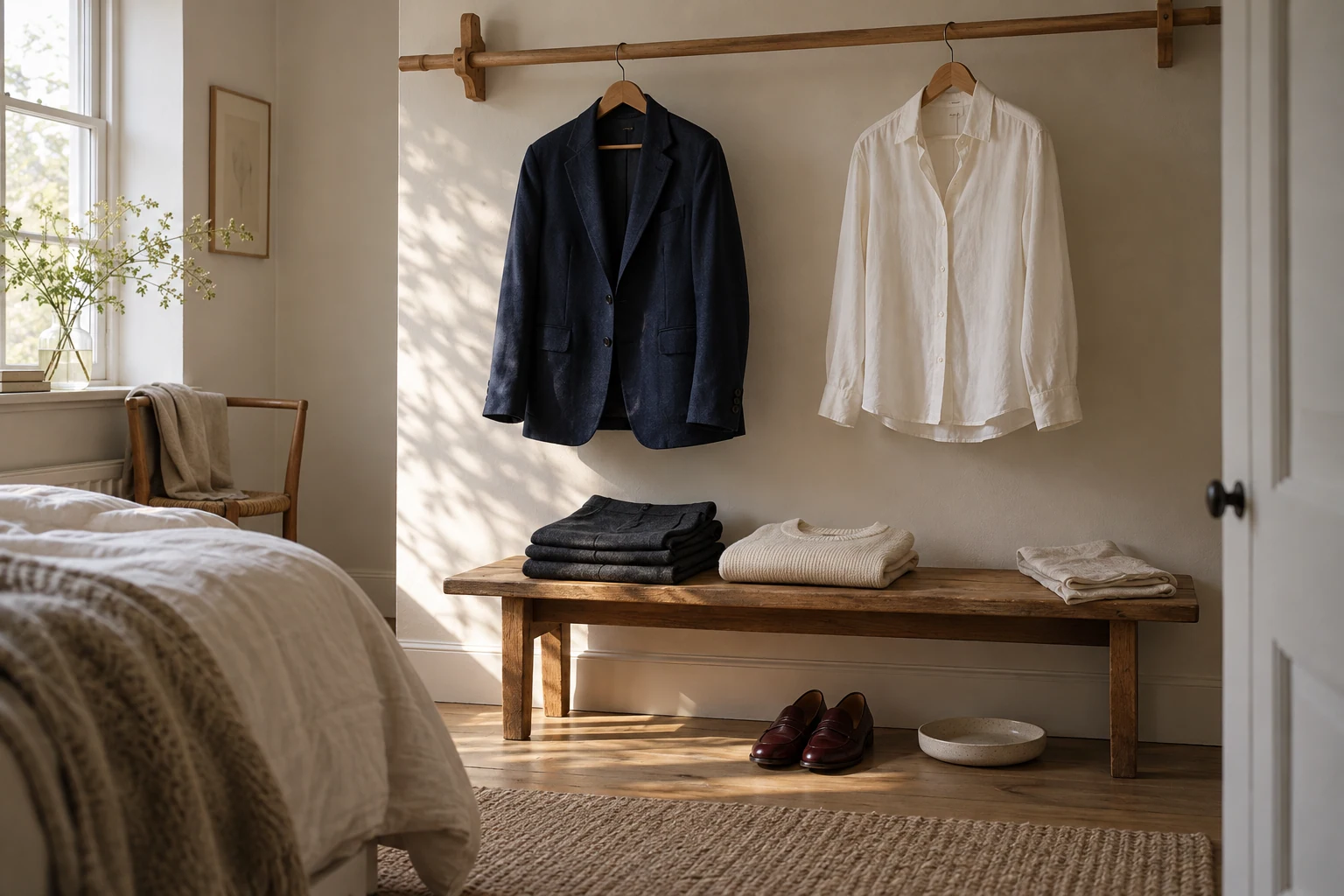
Now take apart the occasion outfit. The blouse might join plain trousers and the flat shoes already by the door. A jacket can sit over a familiar cotton top. A skirt can keep its interesting surface while the rest of the outfit becomes straightforward. Choose a real day for the next combination, with its actual movement and weather in mind. Reuse becomes easier to imagine when it has a place to go.
Notice which detail made the original outfit feel formal. It may have been the combination of shiny fabric, polished shoes and an elaborate accessory, rather than any one garment. Change one of those relationships and look again. A soft top beside crisp trousers offers a different mood from the same trousers with a structured jacket. Keeping two pieces together is also allowed. Repetition is perfectly compatible with having a recognizable point of view.
If something felt awkward, record the specific difficulty before deciding that the item is a failure. Perhaps the bag could not hold the essentials, or a sleeve kept meeting the table. The next arrangement might solve that through a different companion piece or occasion. A repair or alteration, where suitable, is a separate decision worth making deliberately. You do not have to invent a new purchase to explain why one evening combination needs adjustment.
Finish with a second outfit you could put on without another planning session. Lay the pieces together or write down the combination, then return them to their proper places. The exercise makes no grand promise about the footprint of a wardrobe; it gives one set of clothes another use. Last night's blouse can become Tuesday's blouse. It keeps the detail you liked, sheds the ceremonial waiting period and gets on with being something you wear.
Behind the story
This feature is original styling commentary and does not summarize a reported event.