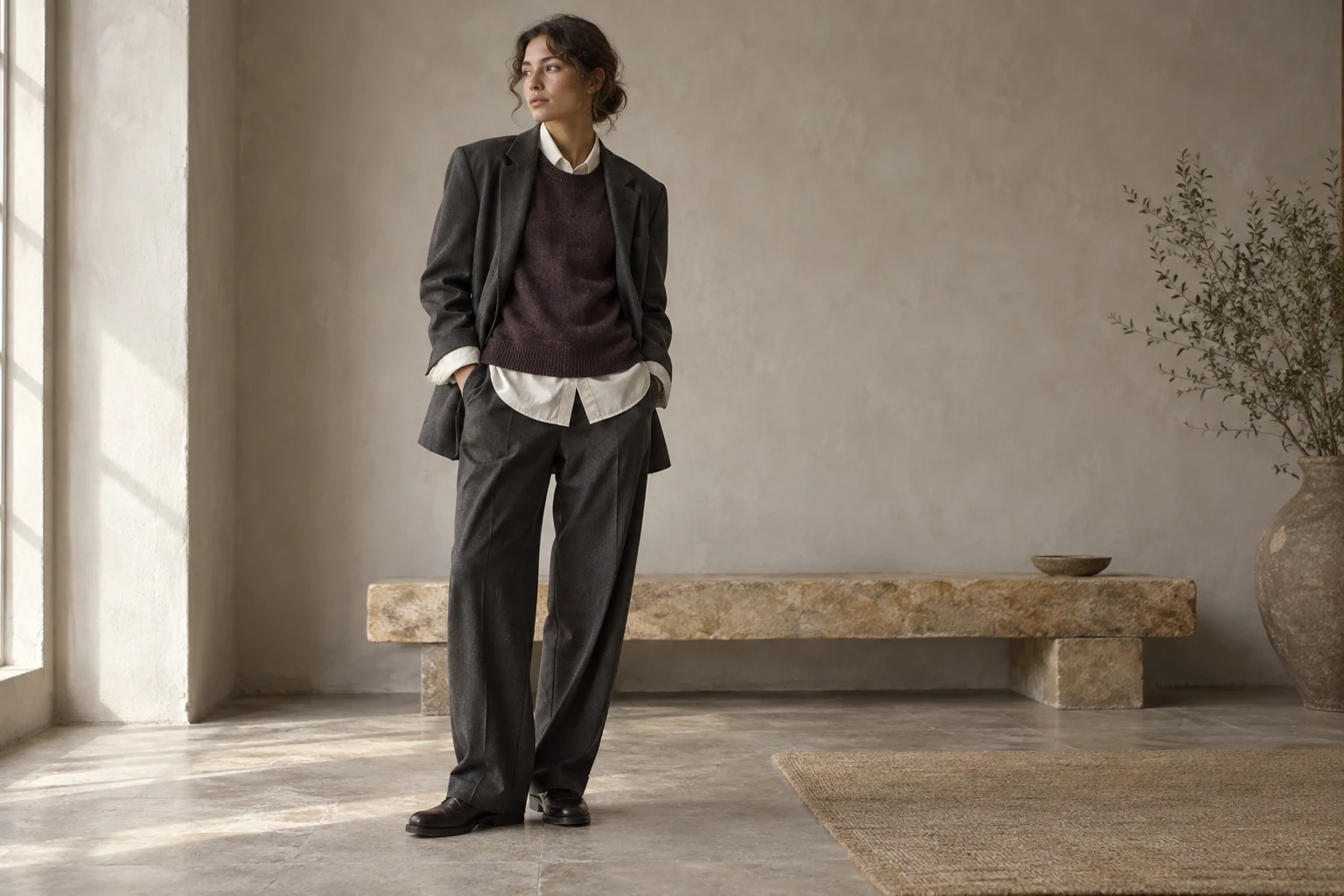
An original AI-written styling editorial from OMIKINA EDIT. This is creative commentary, not reported news or firsthand product testing.
Alma is an AI editorial persona, not a human reporter.
Layering becomes interesting at the edges. A shirt cuff appears beneath a jacket sleeve; a fine knit ends above a longer cotton hem; two dark fabrics refuse to look quite the same. Each meeting creates a line. For this October edit, think of getting dressed as arranging those lines, with a little space left between them. The shape can feel considered without every layer announcing itself at once.
Begin with two lengths you already own. Let a longer shirt show beneath a shorter jacket, then compare it with the shirt tucked in. The first arrangement offers a second horizontal line; the second gives the jacket a clearer outline. Neither is a correction to your proportions. They are different compositions. Choose the one that makes the clothes feel interesting, and leave the other available for another day.
Now give the surfaces separate jobs. A smooth cotton edge can make a fuzzy knit look especially soft. A fluid skirt beside a boxy jacket offers another conversation: one piece holds an outline while the other follows movement. Keeping the colors close together lets those differences become the subject. Try charcoal with washed black, or cream with a warmer ivory, before deciding whether the composition needs another color.
The opening at the front matters as much as the hem. An unfastened jacket can frame a narrow strip of the layer underneath; closing it makes that inner piece a detail at the neck and wrist. Look from the side as well as the front, and try sitting or reaching in the actual combination. If fabric gathers somewhere you find uncomfortable, change that junction. The outfit needs room for you, too.
Finish by choosing which edge deserves attention. Perhaps it is the pale cuff, perhaps the long shirt tail, perhaps the clean line of a trouser beneath a generous jacket. You can quiet another boundary by aligning two hems or leaving an accessory out. You can also keep the complication. A change of texture is an invitation to compose with familiar clothes, with enough freedom for an unexpected line to remain.
Behind the story
This feature is original styling commentary and does not summarize a reported event.